Real answers about credit
Written by the experts at Solid Credit
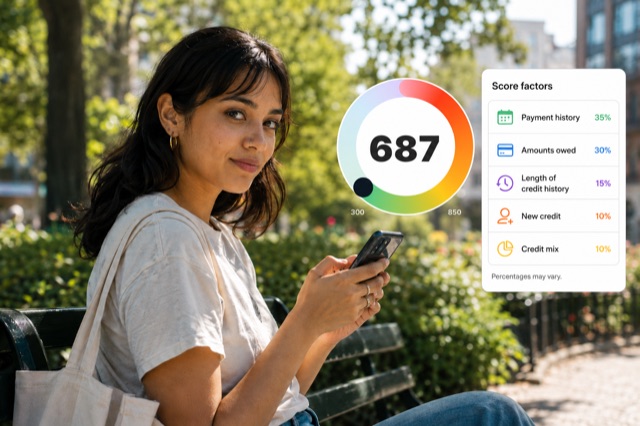
How a credit score actually works
A credit score is a snapshot of how risky you look to a lender, built from what's on your credit report. It's not a mystery and it's not a judgment of you as a person; it's a few specific things, weighted.
5 min read
How to read your credit report without the overwhelm
A credit report is just a record of how you've used credit: who you owe, whether you pay on time, and a few facts about you. It looks intimidating because it's dense, not because it's complicated.
3 min read
The three bureaus, and why your reports disagree
You don't have one credit report. You have three (one each from Equifax, Experian, and TransUnion), and they often don't match. That's normal, and it's a big reason an error can hide in plain sight.
3 min read
How you actually build credit
Building credit comes down to showing, over time, that you handle borrowed money responsibly. There's no shortcut, but there's no mystery either.
3 min read
How credit utilization works (and why it matters so much)
Credit utilization is the share of your available credit you're using: your balances divided by your limits. It's one of the biggest factors in a score, and unlike most things, you can change it fast.
5 min read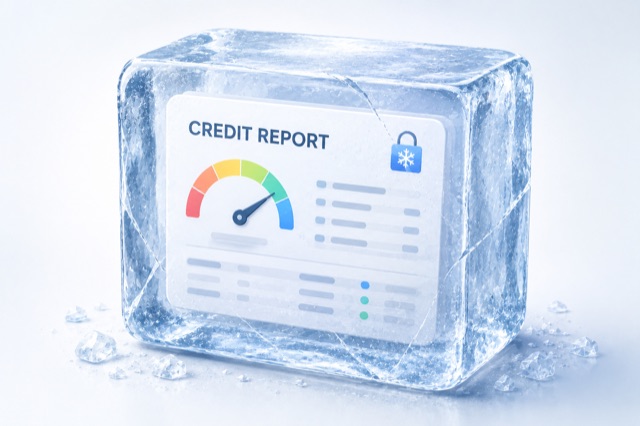
How to freeze your credit (and when to)
A credit freeze restricts access to your credit file, making it much harder for anyone to open new credit in your name until you lift it. It's free, it's reversible, and it's one of the strongest fraud protections you have.
3 min read
How to spot identity theft on your credit report
For a lot of people, a credit report is where identity theft first becomes visible: an account or inquiry that simply isn't theirs. Knowing the signs means you catch it sooner.
3 min read
What counts as a credit report error (and what doesn't)
A credit report error is any information in your file that is inaccurate, incomplete, unverifiable, or doesn't belong to you. That's narrower than "anything that's hurting your score," and the difference decides what you can do about it.
3 min read
Why credit errors happen (and why it's not your fault)
Credit report errors are more common than you'd think. About 44% of Americans' credit reports contain an error, 27% serious enough to hurt a score, and here's the part most people never get told: errors aren't your fault.
3 min read
How to fix a credit report error, step by step
Fixing an error on your credit report is a defined process, not a fight. Once you can see the steps, it's mostly patience and good record-keeping.
3 min read
How a dispute actually works, start to finish
A dispute is a formal request asking a credit bureau to investigate something in your file you believe is wrong. Under the Fair Credit Reporting Act, the bureau generally has to look into it and get back to you, usually within about 30 days.
3 min read
Why disputing by mail can beat the online form
You can dispute an error online, and sometimes that's the right call. But a mailed letter often gives your case more substance to work with, which can matter when the item is complicated.
3 min read
Your rights under the FCRA, in plain English
The Fair Credit Reporting Act (the FCRA) governs your credit reports. It protects you and gives you specific rights that are free to use.
3 min read
The fraud charges that wouldn't go away
Marcus had a credit score above 800. Then a fraudster opened a credit card in his name, and he didn't find out until the late-payment notices started arriving for an account he'd never opened.
3 min read
Credit terms, translated: a plain-English glossary
Credit has its own vocabulary, and most of it was written by lenders, for lenders, which is why so many terms sound like accusations. This glossary translates them into plain English.
8 min read
Does debt consolidation help or hurt your credit score?
Debt consolidation usually causes a small, short-term dip in your credit score (a hard inquiry plus a new account), and it may then improve some scores if it materially lowers your revolving credit card balances.
5 min read
What is a soft credit check? Soft pull vs. hard pull
A soft credit check is a look at your credit that isn't tied to an application, and it doesn't affect your score. A hard check happens when you apply for new credit, and it usually costs fewer than five points, fading over the 12 months FICO counts it.
6 min read
Will rate shopping hurt my credit scores?
Rate shopping barely affects your scores, and it costs you far less than not shopping does. When you compare offers on the same loan inside the shopping window, scoring models count the inquiries as one. FICO allows 14 or 45 days depending on the version; VantageScore uses a 14-day rolling window.
7 min read
What actually hurts your credit score? (And what doesn't)
Only a handful of things actually move your credit score: whether you pay on time, how much of your credit limits you're using, how long you've had credit, how recently you've applied for new credit, and your mix of account types. For standard FICO scores, those are the major categories.
5 min read
How long does it take to fix your credit? An honest answer
It depends on why your score is low. Fixing errors on your credit report can show results in about 30–45 days, recovering from real negative history usually takes months, and rebuilding after something like a charge-off or bankruptcy takes years.
4 min read
What's a good credit score? (And what's average in America)
The average U.S. FICO Score was 714 as of FICO's March 2026 report, and "good" officially starts at 670. But lenders don't grade you against the average; they use cutoffs, and rate improvements tend to flatten in the upper score tiers (though the exact cutoff varies by lender and loan).
4 min read
How to build credit from scratch (when you have no credit history)
You build credit from scratch by getting one or two accounts that report to the credit bureaus and paying them on time. A FICO score generally becomes available once you've had an account open about six months and reported within the last six months; there's no universal number it starts at, and some other models may score you sooner.
5 min read
What happens if a payment fails? (NSF, fees, and your credit)
A failed payment does not directly hurt your credit score; banks don't report failed payments to the credit bureaus. What matters is what happens next: a bill that stays unpaid for 30 or more days can be reported as late.
3 min read
Can AI actually help fix your credit? A fair look
AI is genuinely good at parts of the dispute process: reading hundreds of lines across three credit reports, spotting inconsistencies, and drafting dispute letters. Here's a fair map of where it earns trust and where it shouldn't ask for it.
5 min read
Does buy now, pay later affect your credit score? (Affirm, Klarna, Afterpay)
It depends on which service you use, and the honest answer is that the rules are changing right now. As of mid-2026, Affirm reports its loans to credit bureaus, while Klarna and Afterpay generally don't report your payments to U.S. bureaus at all.
4 min read
You fixed your credit score, now what?
Keeping a good score is a different job than fixing one, and honestly an easier one. Once your reports are clean, your score is maintained by a handful of boring habits: every bill on time, credit card balances kept low, old accounts left open, and a periodic check of your reports for new errors.
5 min read
Why credit advice that worked for someone else might not work for you
Credit advice depends on what's driving your score, and that varies enormously. A move that helps one person may do little for someone else.
5 min read
Does medical debt affect your credit score? (2026 rules, plainly)
Medical debt affects your credit less than it used to, and less than most people fear. Paid medical collections don't appear on credit reports at all, and unpaid bills get a 12-month grace period before they can show up.
5 min read
Can you actually fix your credit for free?
Everything a paid credit help company can legally do, you can do yourself for free. What paid services actually sell is time and execution, not access to anything secret.
3 min read
What identity protection actually includes (and what it doesn't)
"Identity protection" is an umbrella for several tools doing different jobs: watching for misuse, shrinking your exposure, and helping you recover. Here's what each piece does, in plain English.
4 min read
What is dark web monitoring, and what can it actually do?
Dark web monitoring watches the marketplaces where stolen data is traded and alerts you when yours shows up. Here's what it can and can't do, honestly.
4 min read
Data brokers are selling your info. Here's how removal works.
People-search and data-broker sites compile and sell profiles of you, and that exposure is raw material for scams and identity theft. Here's how to get your data removed, free or automatically.
4 min read
The cybersecurity habits that quietly protect your credit
Most identity theft starts small: a reused password, a phishing text, an infected download. Digital hygiene is credit protection, here are the habits that do the most work.
4 min read
Identity theft insurance and restoration, explained
If your identity is stolen, two things decide how bad it gets: who does the recovery work, and who covers the losses. Here's how restoration specialists and identity theft insurance actually work.
5 min read
How collections work (and what to do about one)
A collection is an unpaid debt that's been handed off to a collection agency, and it can land on your credit report. Here's how a debt gets there, what your rights are, and what actually helps.
5 min read
Does a foreclosure hurt your credit score?
Yes. Foreclosure is serious negative history, and the damage usually happens in two steps: the missed mortgage payments first, then the foreclosure status on the same account. Here is how long it stays, and how to start rebuilding.
7 min read
What credit do you need to buy a home?
A mortgage is the most thoroughly underwritten loan you'll ever get, so it's the one where your score matters least on its own. Minimum scores vary by loan type, but your debt, down payment, reserves, and income weigh just as hard.
4 min read
What credit do you actually need to buy a car?
There's no magic score that gets you a car. Lenders weigh your score alongside your income, down payment, and history, and because the car backs the loan, they're more forgiving than you'd expect. Here's what actually matters.
4 min read
What credit do you need to rent an apartment?
There's no required minimum credit score to rent, and no single number every landlord uses. Most look for roughly 620 to 650, but income, rental history, and a clean report often matter more than the score itself.
3 min read
What credit do you need to get a job?
Employers can't see your credit score. For some roles, and only with your written permission, a few pull a modified report with no score, and many states now restrict even that. Here's what's really at stake, and your right to correct it.
4 min read
What credit do you need to pay for a wedding?
A "wedding loan" is just a personal loan, unsecured, so your credit score drives the rate more than it would on a car or a home. Here's what good credit is actually worth, and the question to ask before you borrow at all.
3 min read
What happens to your credit in a divorce?
A divorce decree can assign responsibility between two people, but creditors aren't bound by it. Your credit file is individual, a joint account stays on both reports, and an ex's late payment can still reach your score. Here's what to actually do.
4 min read
FICO vs. VantageScore: does it matter which you track?
People love to say VantageScore is worthless because lenders use FICO. That's a major oversimplification. The scores are highly correlated — and for improving your credit, tracking either is fine.
6 min read
Why do all my credit scores look different?
You don't have one credit score; you have many. Different models and versions, different bureau files, and different pull times produce different numbers, and none of them is "the real one." Here's what to watch instead.
5 min read