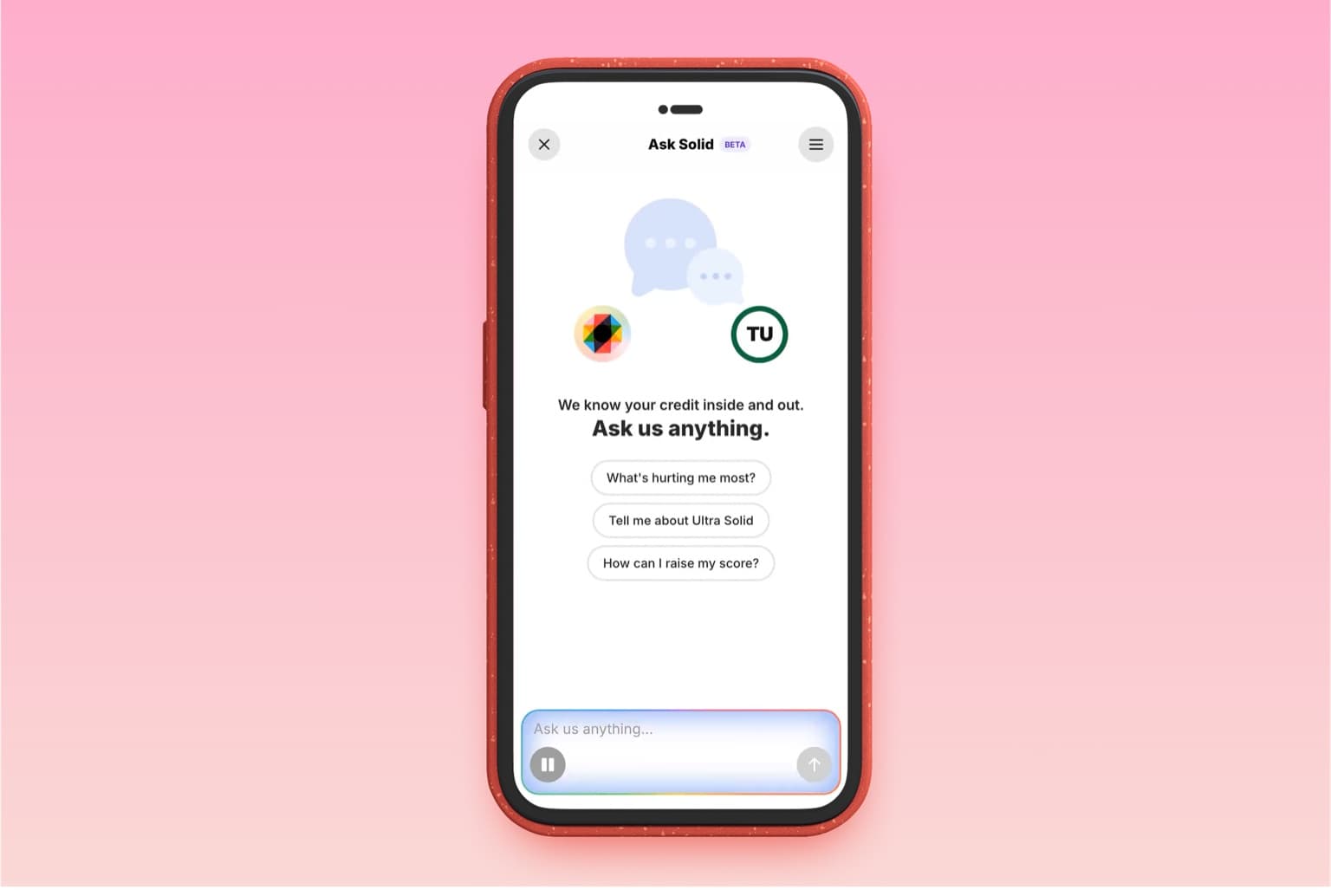
AI is genuinely good at parts of the dispute process: reading hundreds of lines across three credit reports, spotting inconsistencies, and drafting dispute letters. That's the tedious work where humans make mistakes because it's boring. It is not magic: AI can't remove accurate information, can't guarantee results, sometimes gets things wrong, and no algorithm knows your life. If you're skeptical of AI for something as high-stakes as your credit, that skepticism is reasonable. Here's a fair map of where it earns trust and where it shouldn't ask for it.
Let's start with the skepticism, because it's earned
When people tell us they don't trust AI with their finances, the reasons are usually specific and fair:
- AI tends to sugarcoat. A lot of AI-generated advice wraps hard financial truths in relentless positivity. If your report shows years of damage, "You're on your way! 🎉" is a machine avoiding an awkward conversation. Real credit progress takes time, and lenders know it. A tool that won't say so is useless.
- AI gets things wrong. Language models can misread documents and state falsehoods confidently. In credit, where a wrong dispute can waste a 30-day cycle or worse, that's a real risk that demands checks.
- It's your financial life. Wanting a human in the loop for high-stakes decisions isn't technophobia. It's proportion.
Any company using AI on your credit owes you straight answers about all three. So:
What AI is actually good at (and why)
- Reading at scale. Three bureau reports can run to dozens of pages of near-identical entries. Cross-checking every account, date, balance, and status across all three is exactly the kind of exhaustive, repetitive comparison where software outperforms a tired human on their third report, whether that human is you or a paid credit consultant.
- Pattern-spotting. Common error types have recognizable signatures: a paid account still showing a balance, a late mark with impossible dates, the same debt listed twice. AI is a strong first-pass detector.
- Drafting. Dispute letters are structured documents with legal references and specific facts. AI drafts them quickly and consistently. (You should still read what's being sent in your name.)
- Being available at 2 a.m. without judgment, which matters more than the industry admits. Plenty of people avoid dealing with their credit partly because they dread being judged for it. Software doesn't judge.
What AI cannot do, no matter what an ad says
- Remove accurate negative information. No AI, no human, no company. The law is the law.
- Guarantee a score increase. Any tool promising "+100 points with AI" is using AI as a marketing word, not a method.
- Understand your circumstances. An algorithm can see that a payment was missed; it can't know there was a medical emergency, a layoff, a divorce. Decisions that depend on your life should involve you, and, when the stakes are high, a qualified human.
- Replace your judgment. AI should propose; you should decide. A tool that files disputes you haven't seen, in your name, has the relationship backwards.
A fair checklist for any AI credit tool (including ours)
- 1. Does it show its work? You should see which entry it flagged and why, not just "we found 6 issues, upgrade to see them."
- 2. Can you review before anything is sent? Non-negotiable.
- 3. Does it deliver bad news plainly? If every screen is celebratory, the tool is managing your feelings instead of your credit.
- 4. Does it over-promise? "Guaranteed deletions" or promised point jumps mean walk away, AI or not.
- 5. Is a human reachable? For the moments that need one.
Where Solid Credit fits, honestly
Solid uses AI for the reading and drafting: scanning your three reports, flagging entries that look wrong, and building the dispute letters. That's the part we'd stand behind against any human doing the same task by hand. What we try hard not to do is let the software pretend: if your situation will take a year, the product should say a year; you review every dispute before it goes anywhere; and when you'd rather hear something from a person, that's a reasonable ask. If you're AI-skeptical, you can treat ours as a very fast report-reader whose work you check. That's what it is.
This article is for general information, not financial or legal advice.
Common questions
Can AI fix my credit score?
AI can flag potential errors and draft disputes efficiently. It cannot remove accurate information or guarantee results; nothing can, legally.
Are AI credit tools safe?
It depends on the tool. Safe versions show their reasoning and let you approve everything before it's sent. Avoid tools that act in your name without review.
Is AI better than a human credit help company?
At reading reports and drafting letters, often yes: it's faster and doesn't fatigue. At judgment, context, and your particular life, no. The strongest setup is AI for the tedium, you (or a qualified human) for the decisions.
Why does AI financial advice feel so fake-positive?
Many AI products are tuned to be encouraging, which becomes dishonest when the truth is hard. A trustworthy tool tells you the real timeline.
Do I have to trust AI to use Solid Credit?
You have to trust it about as much as you'd trust a calculator. It does the reading and drafting; you see and approve everything that matters.